Pudgy Webster
A Gentleman in MoscowPudgy Webster is an American salesman whose fruitless attempt to market vending machines in Moscow becomes an unlikely opening for Count Alexander Ilyich Rostov. At first the bar’s laughing audience treats Webster’s setbacks as entertainment; for the Count, however, the salesman’s good humor, American connections, and unexpected encounter with an eminent professor suggest a possible route to a friend in Paris. Webster’s brief appearance turns a comic story of commercial failure into a moment of practical consequence, though the evidence does not establish what becomes of the letter the Count entrusts to him.
Identity and Arrival
Twenty-nine years old, Webster has come to the Soviet capital at his father’s insistence. His father owns the American Vending Machine Company of Montclair, New Jersey, and has set a blunt condition: Webster must not return home until he has sold a thousand machines. The target gives his Moscow venture both its comic scale and its pressure. After three weeks, he has secured only one meeting with a Party official—the assistant to the manager of the skating rink in Gorky Park—and the text presents this modest appointment as his first foothold in a market where his product has almost no prospect of success.
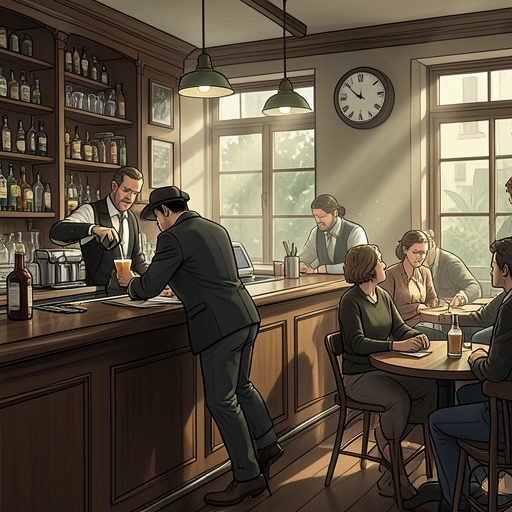
Webster is introduced in the Shalyapin, where the bar’s regulars are celebrating his misadventures. The passage describes him as gregarious and hapless, still carrying an affliction for which he had been nicknamed as a boy; it does not identify the condition more precisely. The nickname Pudgy and the group’s laughter establish the public image through which the Count first encounters him. Yet his easy participation in the company also makes him more than the target of a joke: he is sociable enough to turn disappointment into a story shared with strangers.
The Failed Sales Campaign
By April, Webster has changed his approach. After struggling to reach anyone influential by telephone, he begins securing face-to-face meetings with senior bureaucrats across government, including officials in the People’s Commissariats of Food, Finance, Labor, Education, and Foreign Affairs. The change in access appears at first to promise progress. Journalists watch in amazement as a salesman who could not obtain an appointment starts being welcomed into office after office.
The explanation is not that Soviet officials have discovered a need for vending machines. To demonstrate how the machines work, Webster has asked his father to send fifty cases of American cigarettes and chocolate bars. The samples make the doors open; they do not make the machines sell. After each visit, Webster is ushered out empty-handed. The contrast gives the episode its precise comic rhythm: an American commercial pitch briefly gains admittance to the machinery of government through desirable goods, but the access yields no business. Webster’s persistence is real, even as the results remain nil.
At the bar, he tells his companions that he thought he had someone on the line that day. His fishing metaphor compresses the pattern of the campaign into a near-success: he keeps trying, can imagine a sale within reach, and still has nothing to show for it. His willingness to describe the failure in humorous terms helps explain why the journalists have made him a convivial figure. It also gives the Count a point of comparison. Watching Webster, Rostov thinks of Richard Vanderwhile, who is similarly wide-eyed, gregarious, and ready to tell a self-deprecating story. The resemblance prompts the Count to wonder whether Webster might be useful to him.
An Unexpected Opening
That possibility becomes more concrete when Webster waves to someone in the hotel lobby and an eminent professor returns the greeting. The passage does not identify the professor or explain the relationship, but it places the exchange immediately after the Count has noticed Webster’s resemblance to Richard and begun considering him. The professor’s appearance thus serves as a visible sign that the salesman’s social reach may extend beyond the comic failure of his business campaign.
Shortly after midnight, Webster settles his bill, pats his companions on the shoulder, and whistles an approximation of The Internationale as he climbs the stairs. Once he has closed his room door, however, his posture straightens and his expression becomes more sober. The contrast marks a private shift away from the convivial performance downstairs. The text does not explain why he changes, so the gesture should not be treated as proof of a hidden identity or a specific plan. It does, however, complicate the barroom impression of a man who is merely gregarious and hapless.
The Count is waiting in one of Webster’s chairs and switches on the lamp. Webster is presumably startled, but neither jumps back nor shouts. When the Count identifies himself as Alexander Rostov, Webster responds courteously and asks whether there is anything else he can do for him, despite having said that the hour is late and he has an early appointment. Rostov answers that he has a letter to be delivered to a friend in Paris, whom he thinks Webster might know. The friend’s identity and the letter’s contents are not disclosed here, and the passage does not confirm that Webster ultimately delivers it. What it does establish is the Count’s request and his belief that the American may be able to help.
Role in the Count’s Plans
Webster’s importance in this episode lies in an unplanned crossing of social worlds. His Moscow business has repeatedly brought him into government offices without producing a sale; his greeting to the professor and his American background now make him potentially useful for a different purpose. The Count has been searching for a practical opening, and the salesman who seemed only to embody commercial frustration offers a possible connection beyond the hotel. Chance, rather than a carefully engineered introduction, supplies the opportunity.
Webster’s response is accommodating. Although he initially says that the hour is late and he has an early appointment, he ends up offering the Count whiskey. Rostov, who generally avoids alcohol after eleven and says he never drinks after midnight, accepts; the first glass is followed by a second. The consequence is recorded from the Count’s perspective rather than Webster’s: he leaves in an elevated frame of mind. Webster also gives him a package of American cigarettes for Anna Urbanova and a chocolate bar for Sofia. These small gifts connect Webster’s unsuccessful sales strategy to the Count’s personal world, transforming the samples that opened government offices into useful tokens carried away from a private meeting.
The episode leaves Webster at the threshold of a larger undertaking. He has not yet been shown delivering the letter, and his own sales objective remains unmet in the supplied account. But he has moved from being the object of a bar’s amusement to a possible intermediary in the Count’s plans. His mixture of persistence, sociability, and unforced generosity makes that turn plausible without erasing the comedy of his failures: in Moscow, the vending machines do not sell, but the cigarettes and chocolate still find their way to people who matter.